
Face detection is how an archive stops being a graveyard and starts being a working library. Faster retrieval, better context, less manual effort. Most news is about people – what they said, where they were, what they did. And all of that is in your archive.
We’ve been focused on making people metadata useful for years. Since 2019, Mimir’s overlap search has helped teams pinpoint the exact moment by combining people on screen with spoken words, objects or translations, finding the exact frame where they intersect.
But cost has kept it on a short leash. When processing is priced prohibitively, face detection gets rationed, postponed, or skipped. That is why so many archives stay under-indexed and harder to reuse than they need to be.
Now for the good news!
Our developers have reworked how face detection runs, meaning we can lower the operating cost by over 95%.
The new hourly cost is 70 cents.
And that cost is just the third-party API cost. So, for (much) less than the price of a cup of coffee, you can run an hour of face detection. You can instantly upgrade the discoverability of all news stories in your archive
As Mimir scales, we will keep simplifying workflows behind the platform and passing that efficiency on to customers. We would rather make face detection an everyday capability to make archives eminently searchable, than price it like a premium add-on. Why innovate if no one can afford to use it?
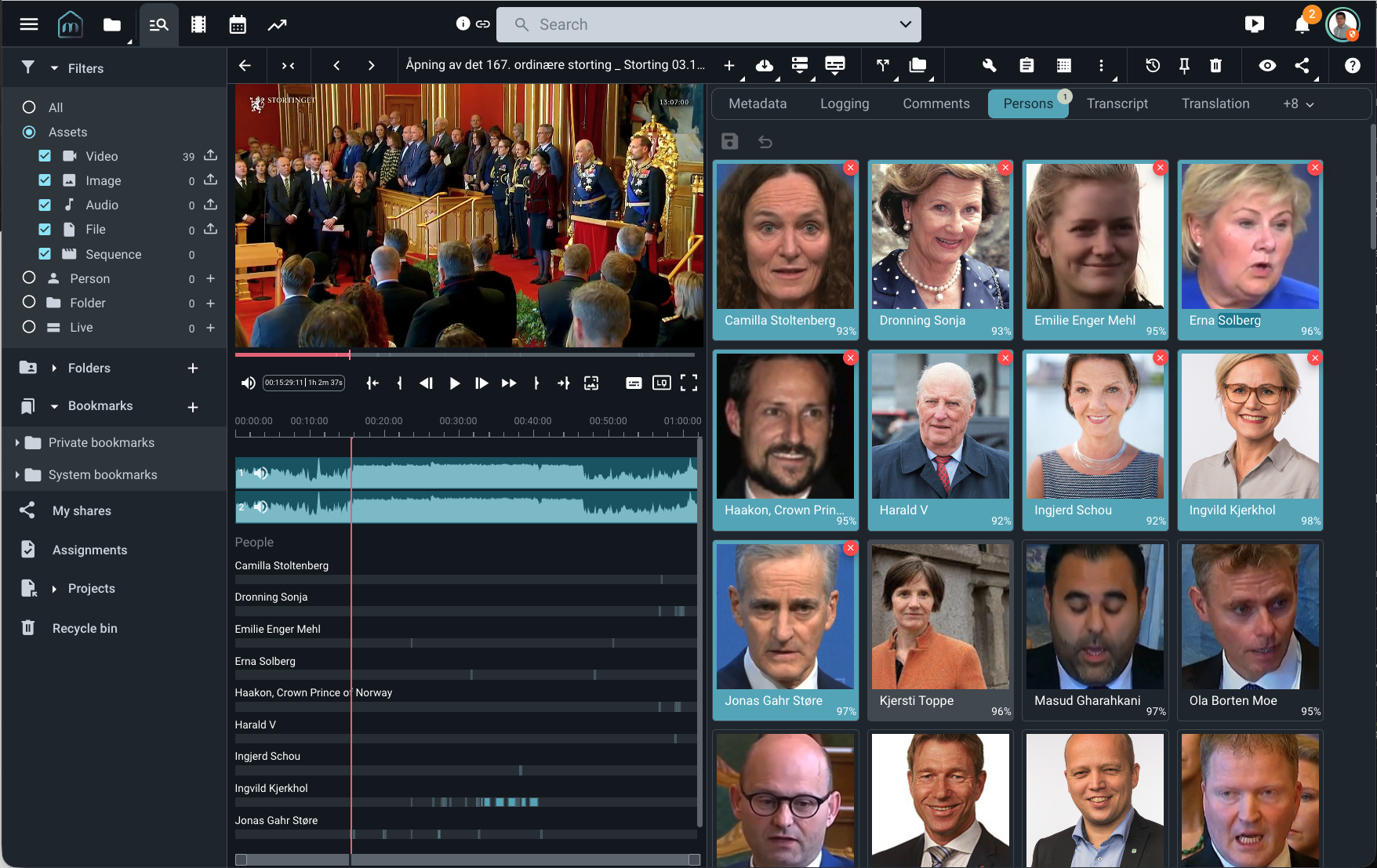
What you can do when cost is no longer the blocker to face detection:
Index more of your library with people metadata
Face detection only creates compounding value when it is applied broadly. With a lower cost barrier, teams can move beyond “only run it on priority content” and start building people metadata across more hours, more folders, and more productions.
Make search more reliable for day-to-day work
Richer people metadata improves discovery across the whole library. Editors and producers can pull relevant moments faster, and archive teams can respond to requests with less manual digging. It also unlocks more specific retrieval, like:
- Finding every moment a person appears across a day, series, or season.
- Fact-check statements - who said what?
- Pulling situational shots in seconds, like “Person X at a rally,” “Person X at a podium,” or “Person X entering a venue.”
- Building “who was where and when” timelines from your own footage, so you can verify context and reuse clips faster.
Check out how you can use face detection across your Mimir content today.
Not a customer yet? Book a demo with us to see how we can help you maximize the use of your archive with face detection.
