65 million assets and counting… the German news brands from BILD Group and PREMIUM Group (e.g. WELT) ingest up to 180,000 photos and videos daily into Mimir for an all-in-one production environment.
Germany's biggest newsroom never stops. Every day, BILD, the country's most-read news media outlet with a total of more than 40 million readers per month in Germany, produces content across print, digital, and broadcast simultaneously, alongside nine other titles in the German news media portfolio of transatlantic, family-owned media company Axel Springer. And one thing every story has is photos.
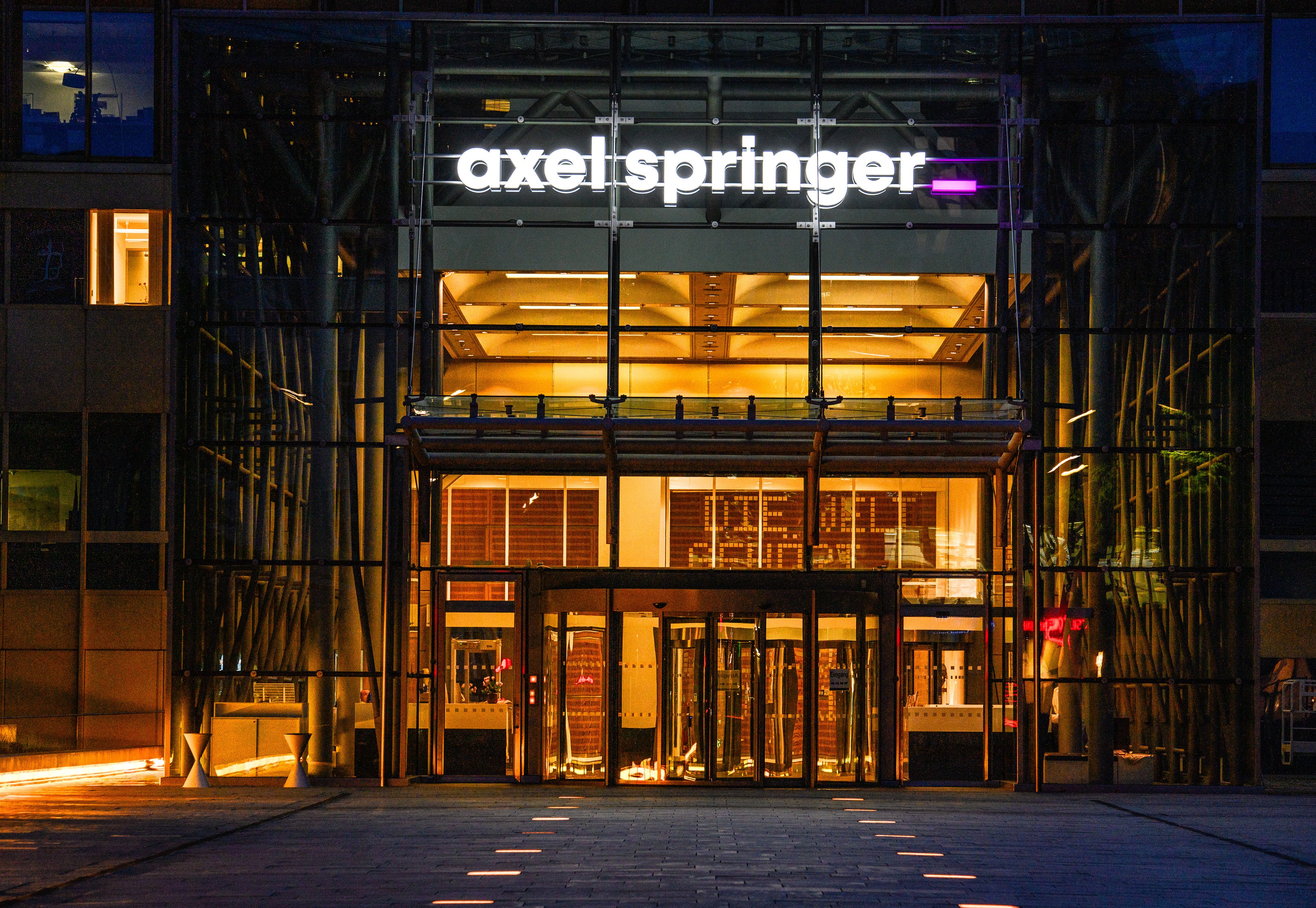
Axel Springer HQ, courtesy of Axel Springer
For nearly 25 years, managing those images meant managing an on-premises digital asset management system (DAM) that had reliably served BILD and WELT through decades of growth – evolving into an infrastructure of roughly 70 servers that kept pace with an expanding portfolio of brands and content formats.
Photos, video, and audio were managed across separate, specialized systems – an approach that reflected the structure of media production at the time. Metadata was embedded directly into image files, a standard practice that worked well within each individual system but became harder to maintain consistently as the portfolio and asset volumes grew.
As the participating brands ambitions for their digital and multi-platform publishing operation grew, they recognized an opportunity to build a foundation that could fully match those ambitions.
And the opportunity wasn’t just about modernizing infrastructure. It was about rethinking how a newsroom could work when photo, video, and audio all lived in one place. A picture editor who needed a video screenshot could get it instantly. A video editor who needed an image could find it themselves.
The potential for time savings was significant: ten brands, hundreds of editors, and hundreds of thousands of assets moving through the system every day. A unified system could support more efficient workflows across the participating brands.
Making the case for Mimir
"The unique advantage is of course we have now all the assets in one system. We often need screenshots from videos and now it's one click. I used to do a screenshot, put it into the system, need to caption it, everything. Now, it's just one click." — Alexander Becher, Deputy Head of Photo Department, BILD
BILD and WELT had already been using Mimir since 2021 – first for video production when BILD launched a broadcast TV service, and later at WELT for archive workflows.
The experience was positive from an implementation perspective: the broadcast service was up and running within six months of first contact. That track record meant that when the decision came to find a new home for the DAM operation, Mimir was one of the options under consideration.
The ambition, though, was bigger than a simple replacement. Rather than find another standalone DAM, the project team wanted to consolidate everything – photos, video, audio – into a single production environment.
The goal was to create a shared environment where editors, designers, and photo desk teams across the participating brands could access photo, video and audio assets through one platform.
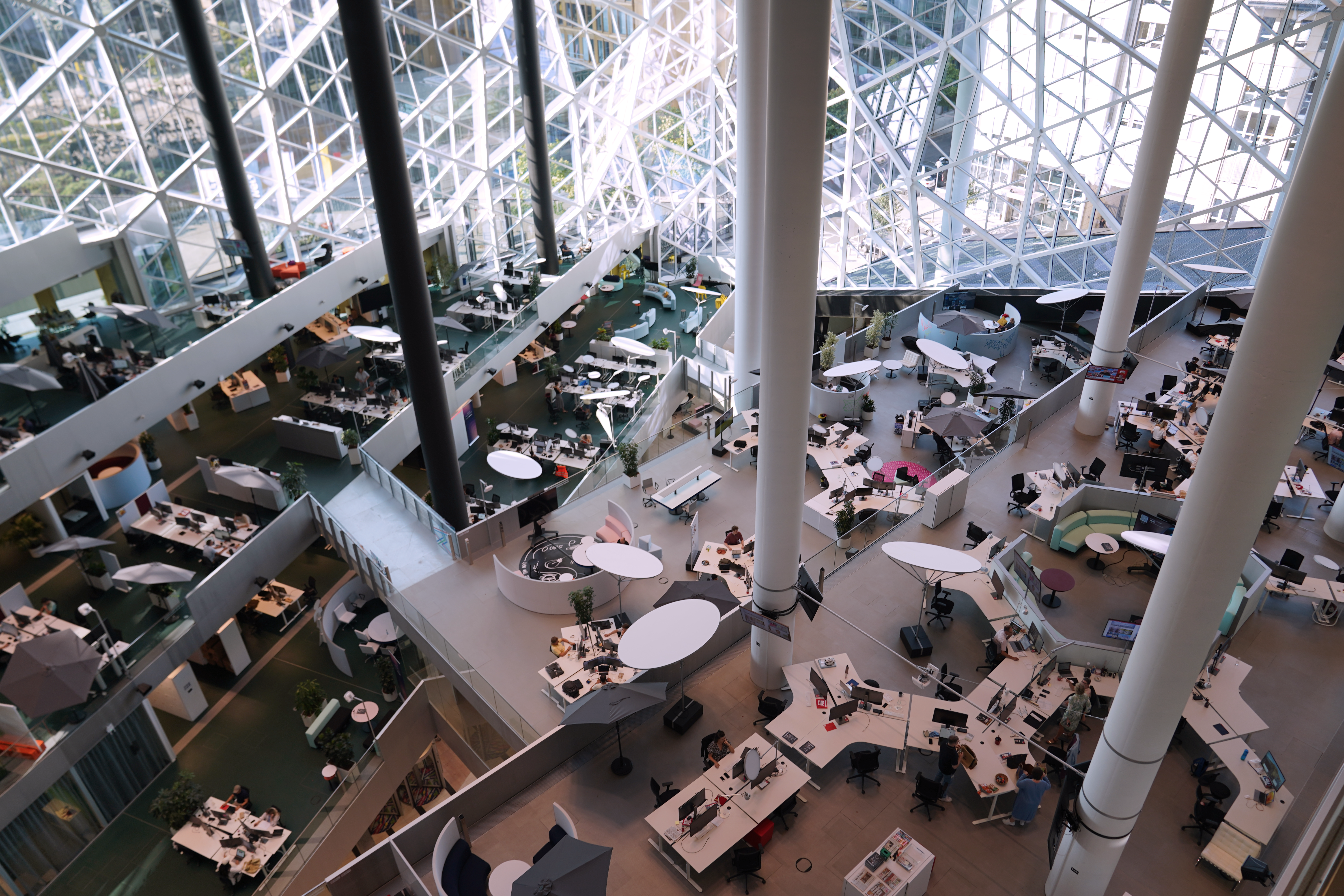
Axel Springer Atrium showcasing its newsroom, courtesy of Axel Springer
Mimir offered an approach that went beyond a like-for-like replacement of DAM capabilities by combining photos, video, and audio in one platform.
Benjamin Berger, Service Owner for Photo and DAM at Axel Springer IT, had worked closely enough with Fonn Group to know how they operated. He had seen how features got built: in close collaboration with users and project teams.
"The vision to have all assets in one system — and the experience that Fonn Group develops features very fast and in a good way, was the argument. We trusted them to do it with us, together, in that short timeframe," said Berger.
Fonn Group committed to co-developing the necessary capabilities alongside the project team rather than asking them to wait for a future roadmap. That commitment, and the hard deadline of vacating the data center (over 70 servers) with the prior provider, made the decision possible.
"Mimir committed: yes, we can do it with you together. And that was the argument for us,” said Berger.
Climbing the mountain
The migration itself took 14 months. What made it technically demanding was largely invisible to end users. As mentioned, the previous system had stored metadata inside image files, and every third-party system in the production stack used by the participating brands read metadata directly from those files. Transitioning to Mimir’s centralized database meant rearchitecting these integrations from the ground up.
To ensure a seamless transition, the entire ecosystem of connected systems was reconfigured to query Mimir’s API. That integration work ran in parallel with the migration itself, ensuring continuity throughout.
Of an estimated 65 million assets, around 50 million were migrated into Mimir – a curated transfer that ensured only relevant, active assets moved to the new system. Five million agency images continue to arrive on a 30-day rolling basis.
The daily scale of the operation meant there was no margin for error. During major international news and sporting events, the system handles hundreds of thousands of photos daily.
A metadata error at that volume affects tens of thousands of assets within hours and can create significant operational issues. Ensuring the success of the new system required more than just the right features – it required close coordination between the project teams. The Mimir team provided 14 months of project support throughout the migration period.
Berger emphasized the importance of this dedication: "Mimir's consistent involvement made a real difference. They understood the 'why' behind our requirements from an early stage, which helped keep the project focused and coherent throughout."
Managing the change on the editorial side required equal care.
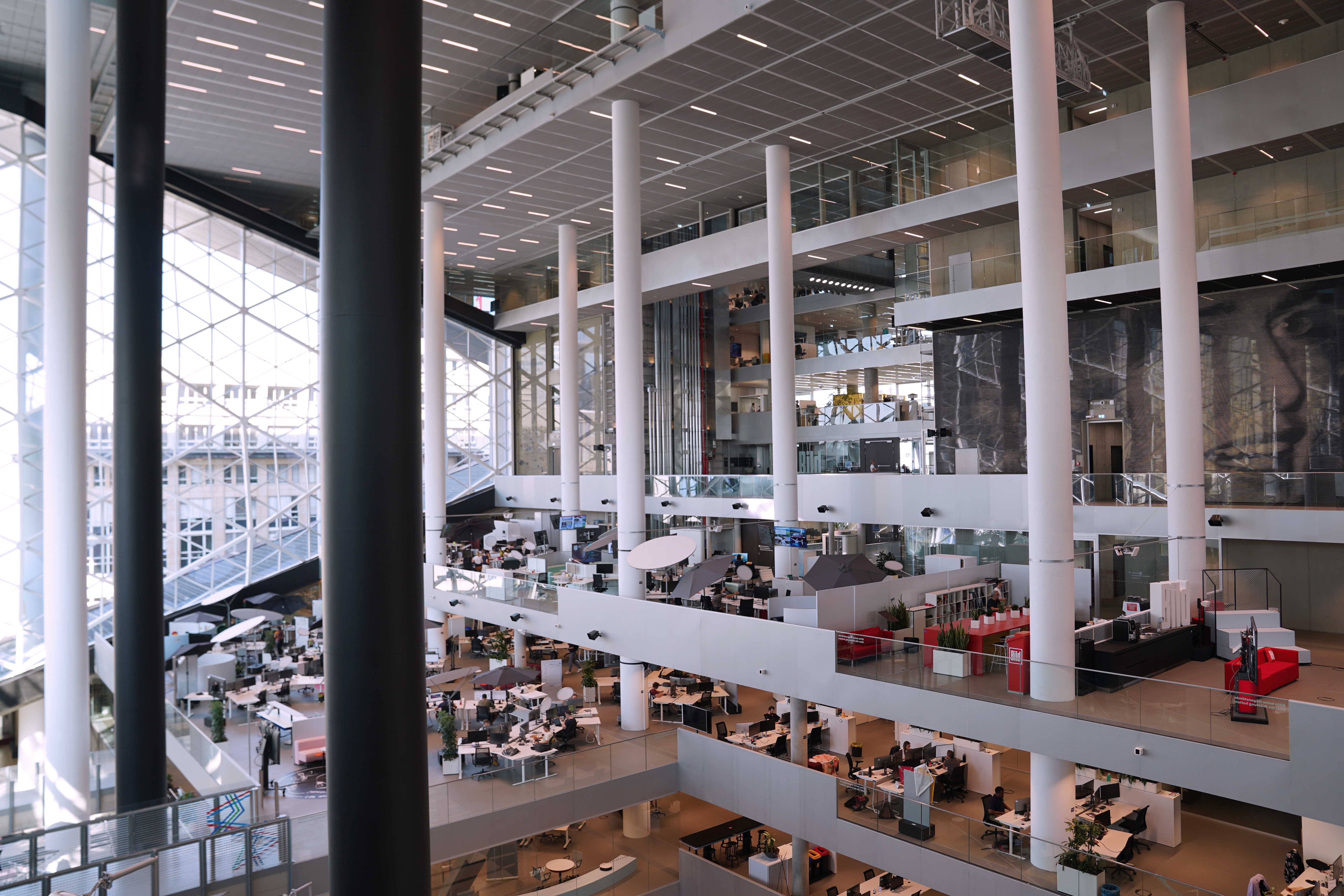
Axel Springer Atrium showcasing its newsroom, courtesy of Axel Springer
Alexander Becher, BILD's picture desk lead, spent five months working directly with Mimir's development team before launch – helping translate newsroom realities into product decisions and ensuring the system was built around how a picture desk actually operates, not how developers imagined it did.
Then, for two months before go-live, he ran weekly briefings for the entire picture desk team. Some of his colleagues had used the previous system for decades.
"Communication and change management — that was the biggest part. We have people who have been here for more than 20 years and introducing a new system for a core process is a big change. You can imagine for a lot of people it results in fear. We had to get them into the system as early as possible so they could see: it's not that big of a deal,” remarked Berger.
"And now since we had our go live , it worked out very well. [Mimir] is working every day. We had breaking news situations, we had big events and it’s all worked out. There have been no major problems from day one. I'm very happy with the switch,” added Becher.
Integrated workflows in a single system
Today, Mimir is the single production environment across ten German news brands from BILD Group and PREMIUM-GRUPPE – handling over 55 million assets with up to 180,000 new ingests daily and more than 700 active users each month.
This led to efficiency gains throughout the workflow. Getting a screenshot from a video takes one click. Browsing incoming agency photos – with up to 60,000 arrivals overnight across 50 agencies – is structured by agency and two-hour time slots, with each agency sending to a dedicated FTP, where Mimir picks it up, so editors can scan selectively rather than exhaustively.
At the point of ingest, Mimir automatically applies usage rights and pricing metadata to every incoming asset based on its source. With over 900 distinct price models in play across online, print, and broadcast channels, this process previously required manual checks or separate tooling. Editors can now see immediately whether an image is cleared for digital use or will carry additional costs in print, without leaving the system.
"If AFP sends us a photo, we know immediately: this is where it came from, what it costs to use, which platforms it can run on, and for how long. That information is applied automatically at ingest. The photo department doesn't have to touch any of those pictures to get them to the right channels – it's already done," states Berger.
When an editor places an image in an online article, Mimir recognizes the usage, automatically triggers CMYK conversion for print, and routes the asset to the relevant distribution platforms. Around 1,200 to 1,400 images move through this process every day, without any manual action required.
“Without automation at this level, you'd need a lot of people just to handle the volume of pictures we're using. That's what the numbers mean in practice," says Berger.
Plugin integrations mean teams work in the tools they already know. The project team built its own Photoshop panel directly on top of Mimir – allowing news designers to download, upload, and manage images and metadata entirely from within Photoshop without ever switching systems.
Online content creators use a separate plugin to build teasers and collages, with usage correctly attributed across all source images automatically. Print editors, meanwhile, rely on an InDesign plugin to find picture references and asset IDs instantly.
"They're saving a lot of time because they don't have to leave Photoshop to get relevant information from different sources. That's quite a big impact for them,"says Berger.
Another time saver, is the lack of upgrade disruption. System updates from the IT team, that previously required 90-minute windows now take minutes and can be scheduled around news cycles rather than imposed on them.
When asked about the impact on the team, Berger shared: "Before, we had to coordinate with editorial: is there a situation where we can't do this right now? Then we'd wait. Now, we can say: there's nothing planned, we'll start in ten minutes, and we're done.”
Mimir itself doesn't require any downtime at all and updates automatically in the background, keeping the system current without disrupting production.
More than a migration
For Berger, the significance of what has been built goes beyond the operational improvements, though those matter enormously.
"From my point of view, having everything in one system means we can be more flexible for new requirements coming in. Before, we were always thinking: we have a different system over there, how do we get pictures to it? What does that cost? Now we can just do it.”
Berger added: "We now have a central database, and a much stronger foundation for introducing even greater automation. And we are not even close to using all the potential."
Further ahead, the team is exploring how Mimir can absorb financial tracking and asset accounting currently handled by third-party back-end systems.
"We get all the publication information from the online part and the print part. Why not use that to handle the accounting too? We could get rid of two or three back-end systems on our side – because all the information is now in one place," said Berger.
The development pace has continued to reflect the ongoing collaboration between the teams. An identical-image deduplication feature, automatically consolidating duplicate assets from multiple agency sources and defaulting to the cheapest version, went from feedback to the test environment at a rapid pace.
Becher was particularly happy about the new feature: "We were discussing the idea of a deduplication feature, and within days the developers had already mapped out how to build it and were preparing a version for testing. That kind of responsiveness, at this scale of operation, is what makes the difference.”
Over 14 months, 10 brands migrated 55 million assets and decommissioned 70 servers. This transition helped the team reclaim two days each week previously spent on maintenance, and gain a production operation built on a single, shared foundation: one that supports current editorial workflows and provides flexibility for future development.
Want to see how Mimir can help your reduce media chaos and save your team time? Book a demo today.